
Political reframing in 2025 showed how strategic language choices override traditional metrics, as Democrats' shift from "economy" to "affordability" messaging flipped races nationwide.
The Words That Remade America in 2025
There's a peculiar magic to language moments — those rare instances when a phrase or term suddenly captures something we've all been feeling, but couldn't quite articulate, and then refuses to let go. For most of 2025, I found myself cataloging them, watching as new words and reframed ideas metastasized through our politics, our culture, our everyday conversations in ways that felt genuinely consequential.
If I had to identify the single most consequential word of the year — the one that actually changed the trajectory of elections and scrambled the political narrative — it would be this: affordability.
Affordability: The Word That Rewired Everything
JONATHAN TURLEY: WITH 'RAGE BAIT' CROWNED WORD OF THE YEAR, FREE SPEECH BECOMES THE TARGET
Here's what fascinates me about the rise of "affordability" as a political frame. For decades, we've operated on the assumption that "the economy" is what matters. It's what campaigns organize around. It's what polling measures. It's what pundits obsess over.
Republicans entered 2025 confident this would hold. Jobs were up. Growth was real. By traditional economic metrics, they should have swept elections nationwide. They didn't. And the reason reveals something crucial about how language actually works — not as data, but as meaning.
Democrats made a deliberate pivot. They stopped saying "economy." They started saying "affordability."
It's a small linguistic move with staggering implications. "Economy" is abstract, statistical, disconnected from lived experience. You can argue about GDP while people feel broke. "Affordability" is visceral. It's your grocery bill. Your rent. Your ability to afford healthcare or childcare or a place to live in the city where you work. It's immediate and personal and undeniable.
The polling told the story: affordability wasn't even measured as a distinct metric in 2024. By the 2025 elections, it was everything. Democrats gained eight points on the issue in the two months before the vote — eight points that translated to flipped races and disappointed Republicans who couldn't understand why their economic talking points weren't landing.
The Miami mayor's race is instructive. For 30 years, Miami had a Republican mayor. Then a Democrat running on affordability flipped it. Thirty years. That's not a small shift. That's a tectonic movement driven by a single word that reframed what people cared about.
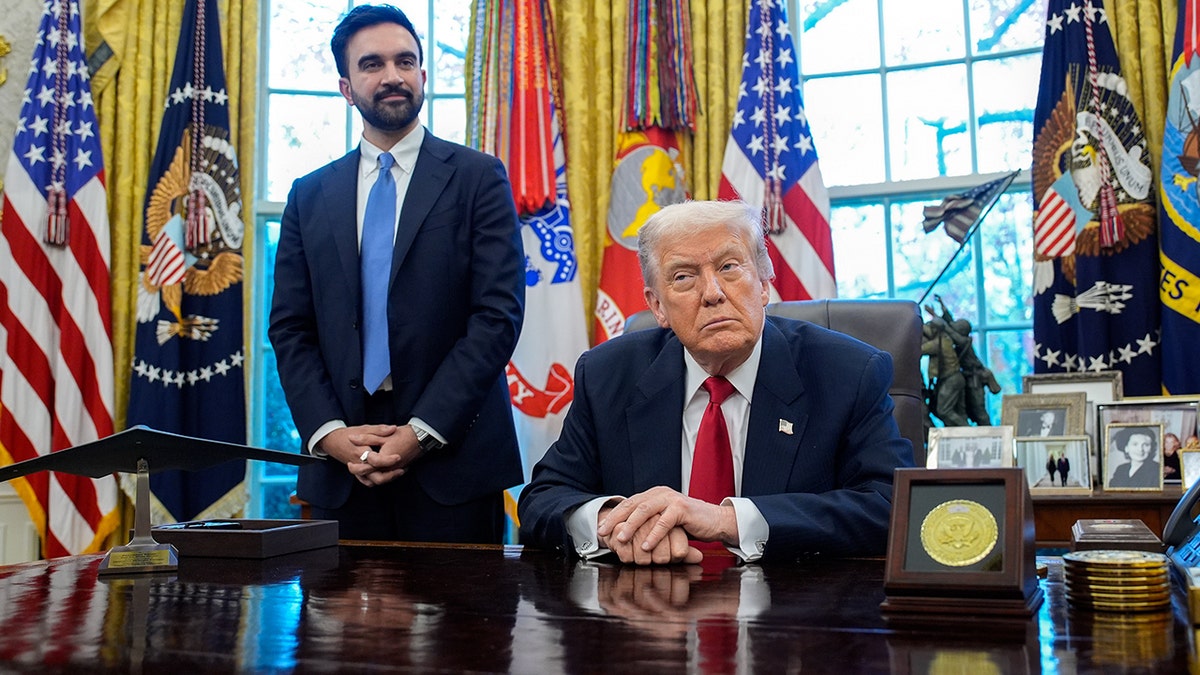
And here's where it gets interesting: Trump noticed. For the first time in quite some time, we've seen him reactive rather than setting the agenda. He launched "Make America Affordable Again" — focusing on bigger paychecks and lowering prices. He watched Democrats define the battlefield and then moved to reclaim it. That's a concession, whether he'd frame it that way or not.
Because, once Democrats defined the conversation as being about affordability, rather than the economy, they'd already won the semantic ground. And you can't win it back by insisting your facts are better. The frame has shifted.
It's a reminder that politics isn't ultimately about reality. It's about the story we tell about reality. And in 2025, the story became: Can you afford to live here? And suddenly, everyone had to answer it.
DOGE: When an Acronym Becomes a Movement
I'm struck by how DOGE worked, precisely because it transcended the boring bureaucratic reality of what it supposedly stood for. The Department of Government Efficiency didn't need to explain itself through its component words. It became a symbol — a verb, even. You're getting DOGE'd. It's happening to you.
What's remarkable is how this inverts what usually happens with acronyms. Usually, they compress and clarify. ESG tried to do that — to make three words into one digestible container. But DOGE worked because people forgot what it stood for and simply understood what it meant: ruthlessness, disruption, the chainsaw on stage, "we're starting over and collateral damage is just collateral damage." For supporters, that meant something clean and necessary. For critics, something dangerous and reckless. But, both camps understood they were talking about the same thing: a commitment to cutting, not governing. And that singular clarity — however divisive — is the hallmark of effective language strategy.
The question it raised though is worth sitting with: What happens when a symbol becomes so powerful that the actual policy beneath it doesn't matter anymore? We still don't entirely know.
Democratic Socialism: Authenticity as Strategy
One of the more unexpected language moments came when a New York mayoral candidate refused to sanitize his identity as a democratic socialist. He could have hedged. He could have spent political capital explaining the difference between democratic socialism and socialism. He didn't.
What he understood — what his campaign understood — is that younger voters don't hear "socialism" the way their parents do. To voters under 30, socialism doesn't conjure gulags or breadlines. It conjures functioning Nordic countries with good healthcare and reasonable work-life balance. It's a generational dividing line in what certain words mean.
More importantly, he understood that in a polarized moment, owning a label — even a historically toxic one — can paradoxically give you more credibility than running from it. He wasn't a typical politician with typical positions. He was someone unafraid to be called what he was. There's stopping power in that. There's authenticity in it, too.
The risk was real. The upside was that he could speak directly to a constituency that had grown exhausted with politicians who triangulate and hedge and soften their positions into meaninglessness. He just said: here's who I am, here's what I actually believe, and here's what I'll do for you. Fast and free buses. Affordable housing. Not an explanation of democratic socialism. Just: this is what it means in practice.
The lesson, which should terrify both parties heading into 2026, is that party labels themselves are becoming almost quaint — at least to younger voters. They don't care if you're a Democrat or a Republican. They care if you're going to do something for them. That's a fundamental shift in how politics works.
Gulf of America: Who Gets to Name Things
The renaming of the Gulf of Mexico to the Gulf of America raises questions that go beyond nomenclature. It's about who gets to decide what things are called, and what happens when you lose that power.
For years, the left has been winning these definitional battles — language around race, gender, sexuality, identity. The right watched it happen and mostly grumbled. The Trump administration decided to fight back visibly, aggressively, consequences be damned. Journalists who refused to comply faced access restrictions. The press was banned from White House events.
Here's what's interesting: both sides are doing this now. The difference is visibility and aggression. And yes, in Florida, people are buying merchandise celebrating the Gulf of America — which tells you everything you need to know about how the same phrase means different things depending on who's hearing it and what it symbolizes to them.
Department of War: The Power of Words to Shape Reality
When the administration renamed the Department of Defense to the Department of War, something unexpected happened. Military recruiting improved. For the first time in years, the armed forces exceeded their recruitment goals.
Why? Not because the name change itself mattered, but because it signaled something. It told recruits: you're a warrior, not an administrator managing a department. You're on offense, not defense. You're ready to fight. That messaging — cascading through the entire institution — changed how people viewed the role.
It's a reminder that language doesn't just describe reality. Sometimes it creates it. The words we use shape behavior, identity, aspiration. Call someone a warrior and they stand differently. They think differently.
What This Actually Means
What 2025 revealed is something almost encouraging when you really think about it. We discovered that language — the deliberate, strategic choice of words — genuinely matters. More than we thought. More than most of us give it credit for.
The most successful language moments of the year didn't argue with facts. They reframed what facts mean. Affordability didn't deny economic growth. It reframed what that growth means to people checking out at the grocery store. DOGE didn't deny concerns about government efficiency. It symbolized a particular kind of efficiency. Democratic socialism didn't deny the term's history. It claimed it meant something different to a new generation.
This is actually profound. It means that the power to shape our future doesn't lie exclusively with those who control traditional levers of power. It lies with whoever can name the thing we're all feeling but can't quite articulate. Whoever finds the word that captures the zeitgeist.
And that word — affordability — proved stronger than incumbency, stronger than economic data, stronger than the usual playbook. It shows that sometimes the person willing to say the unsayable thing first, the person willing to name what everyone's already thinking, can actually move the needle.
In a moment when so much feels fixed and immovable, there's something genuinely hopeful about that. The next language moment — the next word that remakes the political landscape — could come from anywhere. Could be from either side. Could come from someone we haven't heard from yet.
All it takes is the right word at the right time. A word so true, so immediate, so utterly undeniable that it can't be ignored or explained away.
That's the story of 2025. And it suggests that 2026 is wide open.
 Bears star complains about crucial penalty against 49ers that took away turnover
 Alzheimer’s disease could be reversed by restoring brain balance, study suggests
 Gov Tim Walz responds to Minnesota fraud allegations following viral daycare video and more top headlines
 From Gaza to Iran: What’s at stake in Trump-Netanyahu Mar-a-Lago talks?
 1,400-year-old skull with mysterious flat top found in ancient village, startling archaeologists