

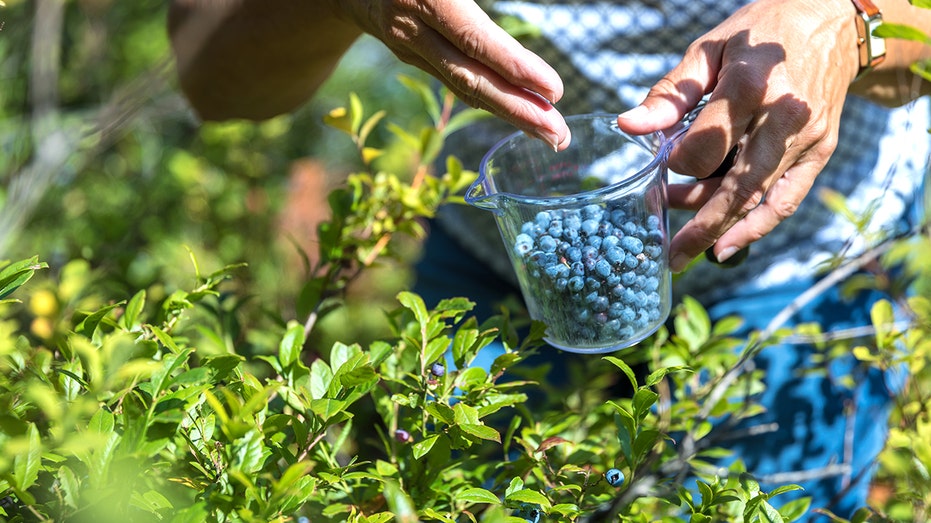
A new scientific review of 12 clinical trials conducted over 24 years links wild blueberries to improved blood vessel function and heart health. Here's what to know.
An ancient berry linked to improved blood vessel function and circulation may offer meaningful benefits for heart health, according to a new scientific review — but most Americans aren't eating it regularly.
The findings, released Jan. 27 by the Wild Blueberry Association of North America, are based on a review of 12 human clinical trials conducted over 24 years examining wild blueberries, conventional blueberries and a range of cardiometabolic outcomes.
"Overall, the authors report that evidence is strongest and most consistent for improvements in vascular function," a news release said.
SITTING ALL DAY? NEW STUDY SAYS CERTAIN FOODS MAY PROTECT YOUR HEART FROM DAMAGE
"Findings related to blood pressure, blood lipids and blood sugar regulation are described as encouraging, though the authors emphasize the need for larger and more carefully controlled clinical trials to confirm these effects."
Many of the compounds in wild blueberries aren't absorbed right away, according to the authors.
Instead, they reach the gut, where microbes help turn them into substances that enter the bloodstream — which may help explain the positive effects on heart and metabolic health.
CLICK HERE TO SIGN UP FOR OUR LIFESTYLE NEWSLETTER
People can see these benefits by regularly eating about one cup of wild blueberries per day, the review found.
Packed with flavor, the tiny berries grow on small shrubs that are connected underground through stems called rhizomes.
The hearty plants are designed to survive the harsh winters in Maine and Canada, and researchers believe those stressors "may prompt the plants to produce a wide variety of protective compounds, particularly polyphenols such as anthocyanins."
TEST YOURSELF WITH OUR LATEST LIFESTYLE QUIZ
Even though the berries are hard to find fresh, most of them are frozen right after harvesting — and chances are they're hiding in your local supermarket's freezer section.
Dorothy Klimis-Zacas, a professor at the University of Maine and co-lead author on the study, said wild blueberries "have been valued by people for thousands of years."
"Traditional knowledge recognized their value, and today's research continues to explore how the unique composition of wild blueberries may support health when eaten as part of an overall balanced diet," she said.
CLICK HERE FOR MORE LIFESTYLE STORIES
The specific benefits of wild blueberries are not widely recognized, said Nicolette Pace, a New York-based nutritionist who was not involved in the study — though the health community broadly understands that blueberries are healthy.
"What really impressed me about this study was that it didn't just look at outcomes, it looked at mechanisms and what is actually happening in the body," she said.
"Most people do not distinguish between cultivated fruits and wild or heirloom varieties."
Pace suggested using frozen wild blueberries in smoothies, yogurt and oatmeal, or even baking with them.
She also cited black chokeberries, black currants, wild cranberries and mulberries as other berries that are rich in polyphenols and antioxidants.
"The key takeaway is to prioritize wild, heirloom and seasonal fruits whenever possible," she said.
"They are often far more nutritionally dense than cultivated varieties and can have powerful cardiometabolic and gut health benefits."
 DOJ removes Ed Martin from Trump admin's Weaponization Working Group amid increased activity
 Fox News Digital report spurs 22 AGs to urge expanded House probe into alleged judicial bias
 Was Don Lemon's arrest driven by bias? 'The View' hosts weigh in
 Trump undercuts GOP push to attach SAVE Act to shutdown bill as conservatives threaten mutiny
 NFL releases statement on Giants co-owner's emails with Jeffrey Epstein