

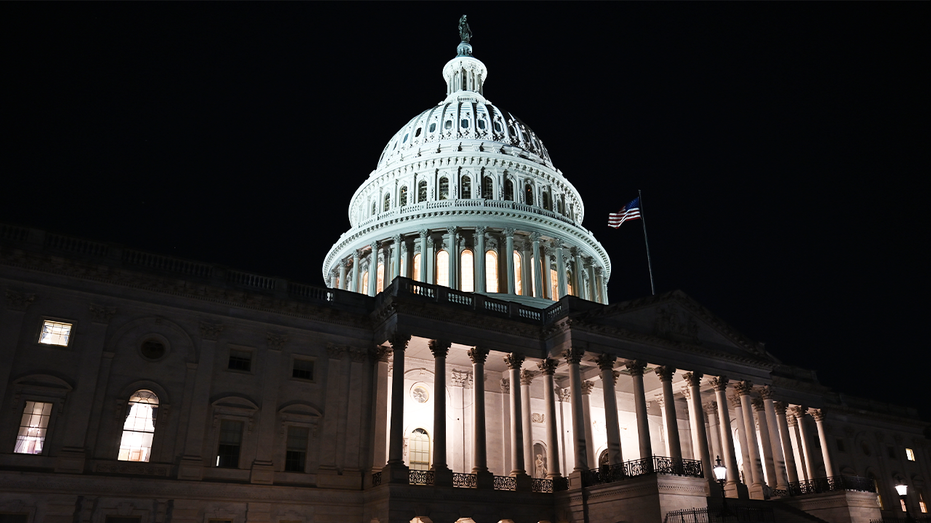
Government shutdown looms Saturday as Congress faces weekend deadline. Federal workers' pay schedules offer important clues about potential duration.
There is an old trick which may help you divine the length of a prospective government shutdown.
The signpost to watch is the pay schedule for federal workers.
Let’s start with the basics. This potential partial shutdown would impact six areas of the government and hits 78 percent of all federal spending. It’s set to begin at 12:00:01 a.m. ET on Saturday, January 31.
But since it’s over the weekend, some call this a "lapse in appropriations."
DEMS RELENT, SENATE SENDS $174B SPENDING PACKAGE TO TRUMP'S DESK AS SHUTDOWN LOOMS OVER DHS FUNDING
For starters, that technicality of a "lapse in appropriations" is a shutdown by another name. But it does give lawmakers wiggle room to resolve the issue before 9 am ET on Monday, February 2. That’s when most federal workers return to the job.
But the real barometer to watch is the federal paycheck schedule.
The government last paid many federal workers on January 21. That was one day later than usual because of the Martin Luther King federal holiday.
However, the next batch of checks is due to go out on Monday, February 2. This paycheck covers the work period running through Thursday, February 5. But the government cuts the checks on Monday, ahead of the completion of the pay period.
CONGRESS ROLLS OUT $80B SPENDING BILL AS DEMS THREATEN DHS FUNDING AMID SHUTDOWN FEARS
But, Fox is told that workers would at least receive a partial paycheck for work completed through Friday, January 30. That’s the last day that the government is funded. So those checks still go out on February 2. But they don’t cover work for next Monday through Thursday if there’s a lapse in appropriations.
Any money dealing with expenditures beginning on January 31 is illegal. It’s a violation of the Antideficiency Act. The executive branch is spending money not appropriated by Congress.
So the weekend gives lawmakers a bit of a breather to figure things out. And the next day to cut many federal checks doesn’t fall until Tuesday, February 17. That is one day later than usual because of Presidents' Day on Monday, February 16.
Missing any portion of a paycheck is not optimal. But the upside is that Congress and the executive branch have nearly three weeks to solve this before most federal workers miss an ENTIRE paycheck.
However, there are some anomalies.
Workers at the FAA (which includes air traffic controllers, but not TSA) are scheduled to be paid on Tuesday, February 3. Fox is told that FAA employees will receive a full paycheck. That’s because the FAA pay period ended on Saturday, January 24. Thus, that work was completed before the shutdown deadline and Congress appropriated money for that pay. Therefore, payment on February 3 is NOT a violation of the Antideficiency Act.
That said, the next FAA pay period ends on February 7. Paychecks are due to be sent on February 17. FAA and air traffic controllers would receive a PARTIAL paycheck at that point. That’s because some work was performed prior to the shutdown. This scenario mirrors what happened during the fall shutdown. Air traffic controllers received some of their paycheck because of the staggered pay schedule.
But that doesn’t diminish the paycheck PTSD from which many air traffic controllers and TSA employees suffer. They were asked to report to work during the last shutdown, doing stressful work for six weeks without getting paid.
One wonders if there’s any goodwill left among those workers to show up on the job gratis since Congress and the executive branch still can’t get their acts together.
SENATE DEMS REVOLT AGAINST DHS FUNDING BILL AMID MINNEAPOLIS CHAOS, HIKING GOVERNMENT SHUTDOWN RISK
Lawmakers will watch these pay calendars closely if this gets to be a drawn-out fight. However, a minimal "partial" shutdown over the weekend provides lawmakers with a bit of cushion to find a solution.
Fox is told that it’s unlikely that Republicans and Democrats achieve some sort of "breakthrough" on government funding before a likely failed test vote on the original spending bill tomorrow. Senate Democrats have now laid down their demands to rein in ICE. Senate Minority Leader Chuck Schumer, D-N.Y., says Democrats insist on an end to roving patrols. They want a uniform code of conduct for ICE officers which is similar to local and state police. Finally, Democrats want masks off and body cameras on.
After the prospective failed vote, things suddenly get real for everyone. The deadline looms and they don’t have a fix. However, the test vote gives Democrats the opportunity to put a "nay" vote on the scoreboard and show the other side – plus their progressive base – that they mean business when it comes to ICE.
Congress only seems to work on a deadline. Finding an off-ramp before that 11:59:59 pm et deadline on Friday is tough. But the Senate often conducts some of its most productive business on Thursdays and Fridays – especially when staring at the specter of a weekend session.
But the weekend – and the special payment schedules – give lawmakers some agility. In fact, one Democratic source told Fox that a weekend "lapse in appropriations" may help the party politically if they score the ICE reforms that Democrats want. Then they can demonstrate to their base just how far they are willing to push – again. Especially if they extract concessions from the White House.
Schumer still wants Senate Majority Leader John Thune, R-S.D., to rip apart the six-bill spending package and treat DHS funding as a separate animal. Thune didn’t rule that out. But Thune made it clear that the "best path forward is to keep the package intact." Thune noted that splitting the bill was challenging in the Senate. But even if the Senate is successful, the measure must return to the House – after the funding deadline.
"Who knows what happens with it over there," said Thune.
Meantime, Lisa Desjardins of the PBS NewsHour asked Schumer if he was willing to "accept a separate bill outside of the appropriations bills that would contain some of your demands?"
Schumer was vague in his response, saying he needed to hear "concrete ideas" from the White House.
It’s unknown if the sides could even avoid a shutdown with a handshake agreement.
But either way, there’s not much time to figure this out. Either the Senate whirls like a dervish during the day Friday. Or there’s a lot of scrambling over the weekend to avoid a shutdown before the reality of Monday morning sets in.
 Rob Schneider's wife files for divorce after 15 years of marriage
 Reality star Steve McBee Sr's son fights for Trump pardon, says family farm was ‘targeted’
 'Menstrual mutual aid' workshop for 'non-cis menstruators' hosted by UC Davis LGBTQIA
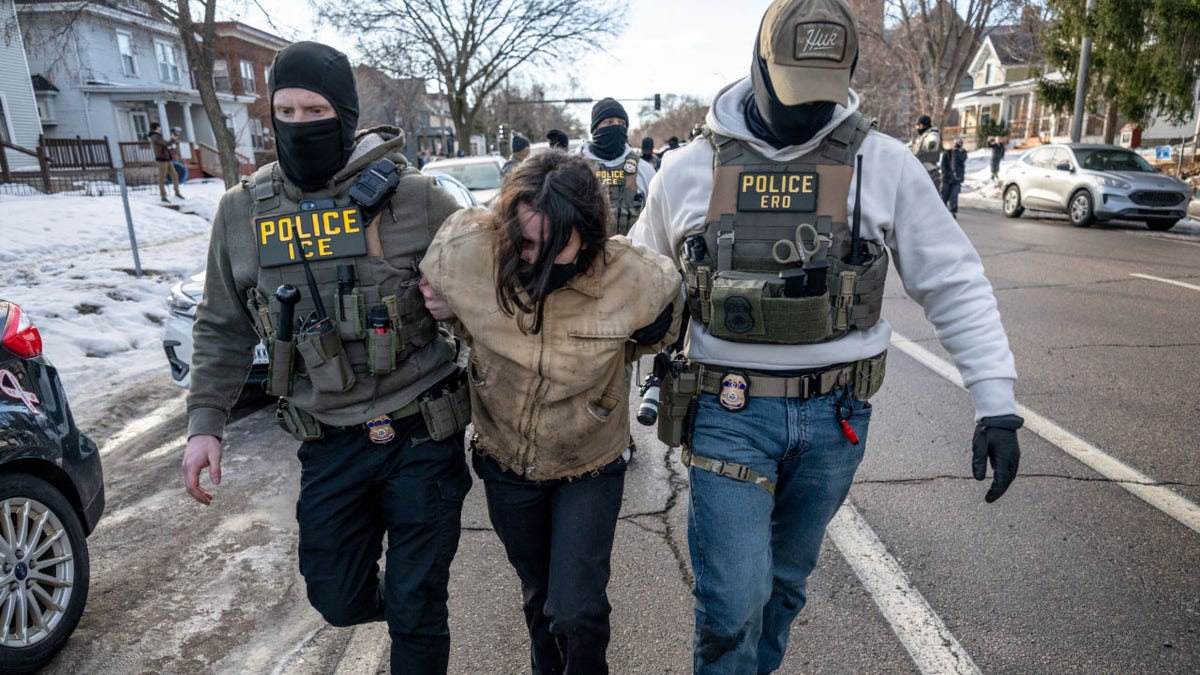 Fox News Poll: 59% of voters say ICE is too aggressive, up 10 points since July
 Fox News Poll: Donald Trump starts 2026 with 44% approval